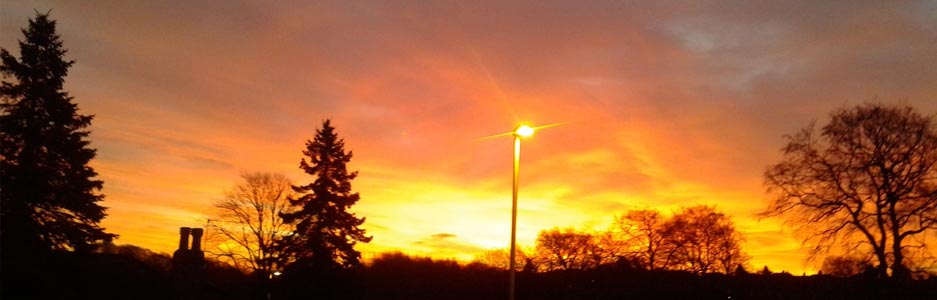
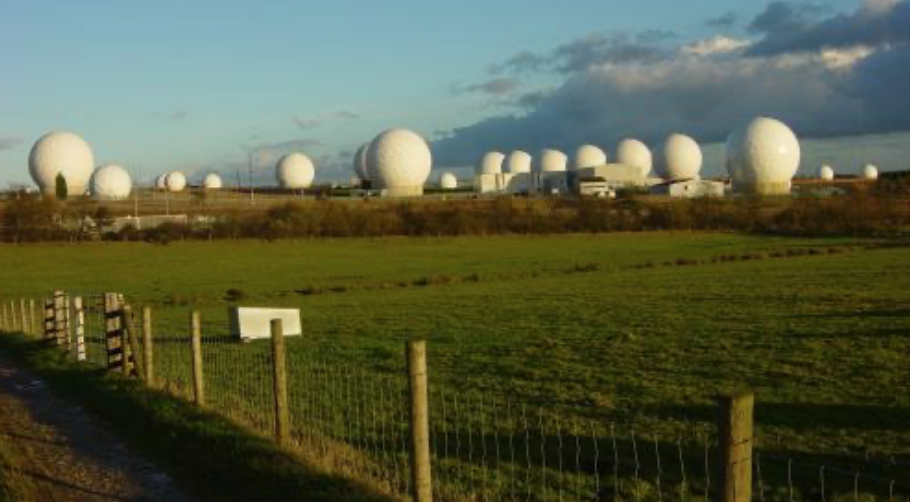
This month we will be listening, like the radomes at Menwith Hill, a distant backdrop to many of my favourite walks. I was going to take my own photograph yesterday, after we were out guerrilla tree-planting again (ten tiny oaks this time), but the light wasn’t good enough. Listening is a skill, nurtured and developed by writers. I think I’m not bad at it – given what people say about my ability to write dialogue. However, I’m aware I have a tendency, in real life, to butt into conversations when I should wait for the other person to finish. At least I have insight.
Next weekend will be the final online gathering of the year of the novelists group of Leeds Writers Circle. I’ve asked them whether having my main character ear-wigging on a conversation in this chapter (while he is out for a walk) is a bit too much given that he listened to another (in the gents’) in the previous chapter. He’s not a nosy parker by nature, but I am – aren’t all writers? Did I tell you about the time, a while ago now, when I tried to listen in to some guys from Menwith Hill who were out for a meal at a local eatery? I was with my aged Mum, in her wheelchair, so I didn’t look like an FSB operative. All they talked about was baseball and holidays, obviously a well-disciplined team.
Talking of intrigue, last week I went on my first ever visit to the National Archives at Kew and was very impressed with the layout, helpful staff and the very reasonable prices in the cafe. I didn’t realise how radical Londoners have become in their commitment to the planet until my train went through this Tube station called Turnham Green – you have to listen, see.
I was on the trail of education department records of sanatorium schools in Yorkshire and had requested six bundles in advance. The Killingbeck (Leeds) archive was thinner than I hoped, the two for Middleton-in Wharfedale, although close to Leeds, were about a more specialist unit, but the other three were very interesting. Eldwick, near Bingley, was the best of the lot – not only because it was the thickest bundle, but because it started with the application to commence a sanatorium school being expedited because of the personal interest of Sir George Newman himself, the national boss of the School Medical Service at the time (1914).
About half the pages are hand-written notes from one education officer to another which often read like conversations. A constant presence in all the bundles across two decades was Dr Muriel Bywaters, a medical doctor who appears to have functioned like a one-woman OFSTED inspector. She comes across as kind, firm, clear and pragmatic in her advice, both to schools and her colleagues. Unlike her contemporary, Dr Janet Campbell, who features in the Eldwick archive and later became a Dame, Muriel Bywaters doesn’t seem to have left much of a mark on history. The more I read, the more I like her voice as it comes through her written notes and reports. I hope that I may yet find more about her.
While writing this bloglet, I had another go at seeking out Dr Bywaters and found that she had spoken at a meeting of the Association of Registered Medical Women in 1912 about her time with the tuberculosis service at Eastbourne. So then I looked at the minute book for the Association, a radical group of pioneering women doctors, but haven’t found her name, yet. The guest speakers at their annual dinner in 1914 were four women doctors just returned from ‘The Balkan War’. They couldn’t have guessed how bad things would become over the next four years, and then there was the influenza…
Like them, we don’t know what the future holds, or how our current pandemic is going to turn out. As with their support for women’s suffrage, the folk in the Menwith Hill Accountability Campaign are busy pointing out the injustices inherent in the existence of places like Menwith Hill. They are worth listening to. Others might maintain that drone strikes based on intelligence gathered at Menwith Hill makes the world a safer place. I think that history will prove them wrong.
Not wanting to finish on too downbeat a note, here’s a link to what the amazing Dr Charles Emogor and his colleagues are doing to try and help the pangolins in Nigeria – in this case the elusive white-bellied variety, the next on our little list.
I look forward to sending out another of my ‘pangolins’ early in 2022.